Agent-of-Agents: Why AI Future Is Recursive
The Data Massagist From messy data to measurable outcomes—governed platforms that power agentic AI.

Agent-of-Agents: Why AI’s Future Is Recursive
Created on 2026-05-09 11:04
Published on 2026-05-11 15:38
On today’s edition, I’ll explore the next frontier of enterprise AI: agents that consume and collaborate with other agents. This time, I’ll focus less on how to technically build multi-agent systems [or the Agent-To-Agent Protocol (A2A)], and more on the business and operational perspective — why these architectures matter, how enterprises are using them, and why agent ecosystems are quickly becoming the next major evolution beyond copilots and chatbots.
Note: If you want to learn more A2A and MCP read the artice: Why Business Leaders Should Care About MCP and A2A?
But before diving into that topic, I’m incredibly happy to share a milestone that feels both personal and industry-defining: the Public Preview launch of www.thedatamassagist.com. In its first week, the site surpassed 10,000+ visitors, a number that still surprises me every time I refresh the analytics dashboard.
Even more exciting, the following two new experiences are now available in beta. Please try it and share your thoughts.
AI-based Conversational Search — a natural-language interface across my entire library of articles, patterns, and frameworks.
The Maturity Model Roadmap Experience — an interactive way to understand where your organization stands in its data, AI, and governance journey.
Enough with the marketing — let’s dive into the real content.
1) Agents That Consume Other Agents
If 2025–2026 were the years of copilots, I believe 2027–2028 will be the era of agent ecosystems — environments where AI agents don’t just execute tasks independently, but collaborate, delegate, coordinate, and consume the outputs of other agents.
And if organizations want to fully capitalize on that shift, they need to start building now.
The mentioned shift isn't theoretical; it's already happening inside enterprises. That is precisely why companies such as Microsoft, Amazon Web Services (AWS), and Google are heavily investing in the platforms, tooling, and infrastructure needed to support it.
The opportunity is clear and accelerating.
According to Gartner and broader industry terminology, one of the most important emerging concepts is the Multi-Agent System (MAS):
“A multi-agent system is an architecture where multiple AI agents collaborate to accomplish a business goal, with each agent specializing in a role, domain, or task.”— (Gartner)
Instead of relying on a single “super agent” to handle everything, enterprises are increasingly shifting toward specialized agents designed for specific domains such as data retrieval, planning, compliance, incident resolution, and customer support.
From a business perspective, these agents are not isolated components; they are designed to:
Collaborate sequentially across workflows
Operate in parallel to handle scale
Delegate tasks dynamically based on context
Share memory and operational context
Escalate decisions when risk thresholds are reached
Interact independently with APIs and enterprise systems
And the scale of this model is about to accelerate dramatically.
This is likely why research such as InfoShot predicts we could surpass 1 billion AI agents by the end of 2028.
From my own experience building data and AI agents and helping organizations prepare their data foundations for AI, I’ve seen a clear technical reality: domain-specific or specialized agents are not only easier and more cost-efficient to build, but also significantly more accurate, with fewer hallucinations compared to broad, general-purpose systems.
That is why, when Microsoft talks about the future of work, it points to the emergence of a new type of organization: the Frontier Firm.
But what exactly is a Frontier Firm? These are organizations — possibly like yours — that are rebuilding their operating model around artificial intelligence. Environments where hybrid teams of humans and AI agents work together, and where a new key role emerges: the Agent Boss. In this model, people define the strategy, direction, and priorities, while agents execute complete business processes and end-to-end workflows.
But of course, we are still human. And when the number of agents grows and the catalog becomes too large to manage efficiently, we need a way to coordinate, orchestrate, and specialize them. Too many agents per person also overwhelms our capacity for applying judgment and decision making. That is where MAS come into play.
Too many agents per person also overwhelms our capacity for applying judgment and decision making
For that reason, getting ready for MAS should be a priority for any enterprise serious about building production-grade AI capabilities.
2) Three Emerging Patterns for Agent‑of‑Agents Architectures
Across industries, three foundational patterns are becoming the backbone of enterprise AI systems.
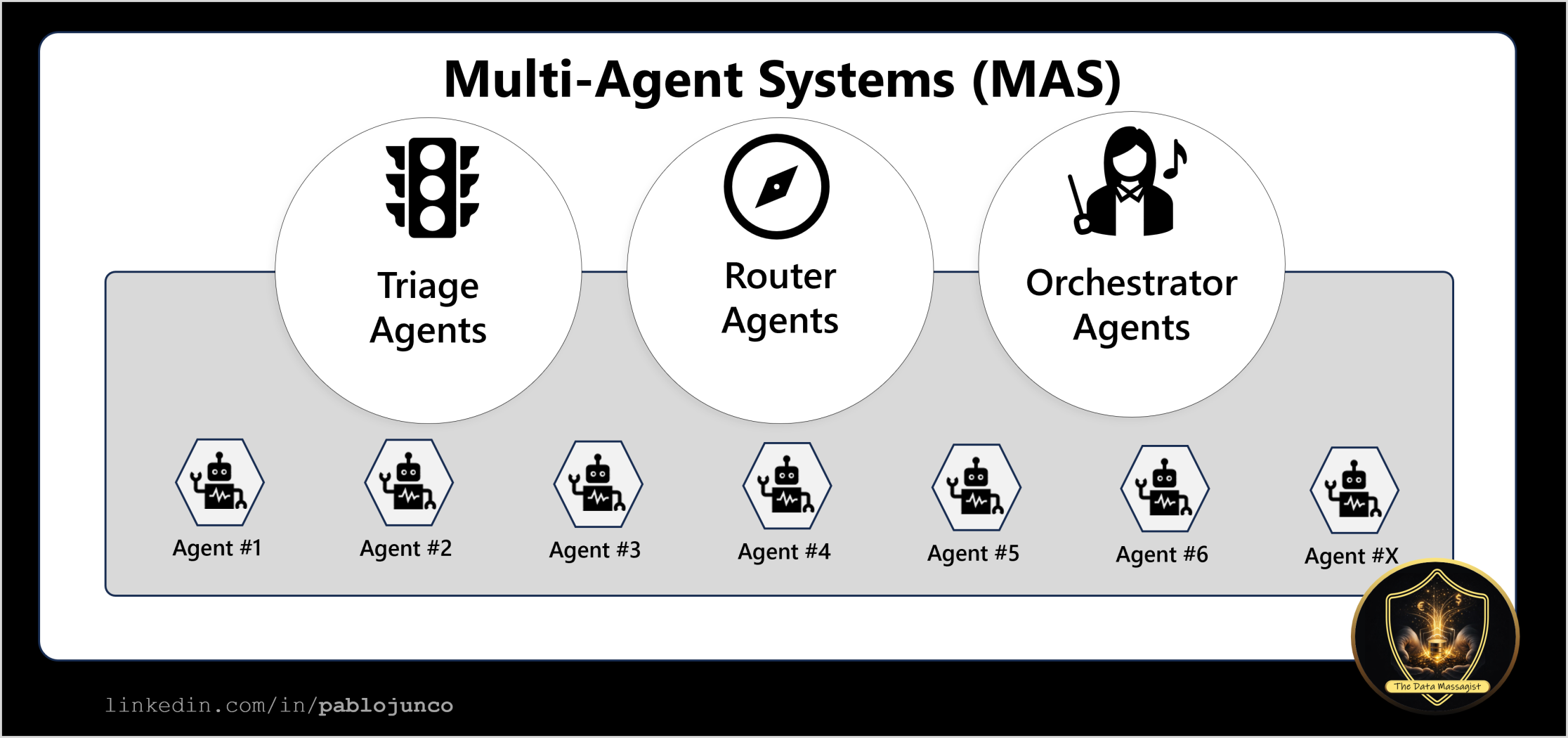
At the core of Multi-Agent Systems (MAS) I see three foundational operational patterns that define how enterprise intelligence is structured and executed:
Triage Agent → Intelligent intake and prioritization: The triage agent acts as the first layer of intelligence, responsible for understanding incoming signals, classifying them, and prioritizing based on business impact, urgency, and risk. It filters operational noise and ensures that only meaningful, actionable events move forward in the system.
Router Agent → Dynamic task delegation: The router agent determines where each task should go next. It dynamically assigns work to the most appropriate agent, system, or domain based on context, capability, and real-time conditions. Instead of fixed workflows, it enables adaptive, intelligent routing across the enterprise.
Orchestrator Agent → Workflow coordination and execution: The orchestrator agent manages end-to-end execution across multiple agents. It coordinates sequencing, dependencies, and shared context, ensuring that complex workflows are executed reliably, consistently, and with governance controls in place.
Still not convinced? Looking for data evidence? The 2026 Work Trend Index (WTI) from Microsoft analyzed trillions of anonymized Microsoft 365 productivity signals and surveyed 20,000 AI-using workers across 10 countries. The findings show that 80% of “Frontier Professionals” — the most advanced AI users — are already using agents for multi-step workflows and actively building multi-agent systems. You can read more in the latest article by Jared Spataro, CMO for AI at Work at Microsoft.
Now that I’ve got your attention, let’s review each pattern in detail.
2.1) Triage Agent — Intelligent Intake and Prioritization
As said, the triage agent represents the first operational layer of intelligence within a Multi-Agent System (MAS), acting as the enterprise’s intelligent front door for incoming signals, requests, and events.
Its role extends beyond simple classification. A triage agent is responsible for interpreting intent, understanding business context, enriching requests with contextual data, and determining which activities deserve attention, escalation, or prioritization.
In essence, it functions as an AI-powered decision gateway — continuously evaluating what requires immediate action, what can be deferred, and what should not consume operational capacity at all.
This capability becomes increasingly strategic as organizations scale and face:
Alert fatigue across operational platforms
Growing volumes of unstructured requests and signals
Fragmented workflows across business domains
Limited execution capacity competing against rising demand
Without intelligent triage, enterprises risk saturating downstream systems, agents, and teams with low-value, duplicate, or misclassified work — ultimately reducing operational efficiency and slowing decision velocity.
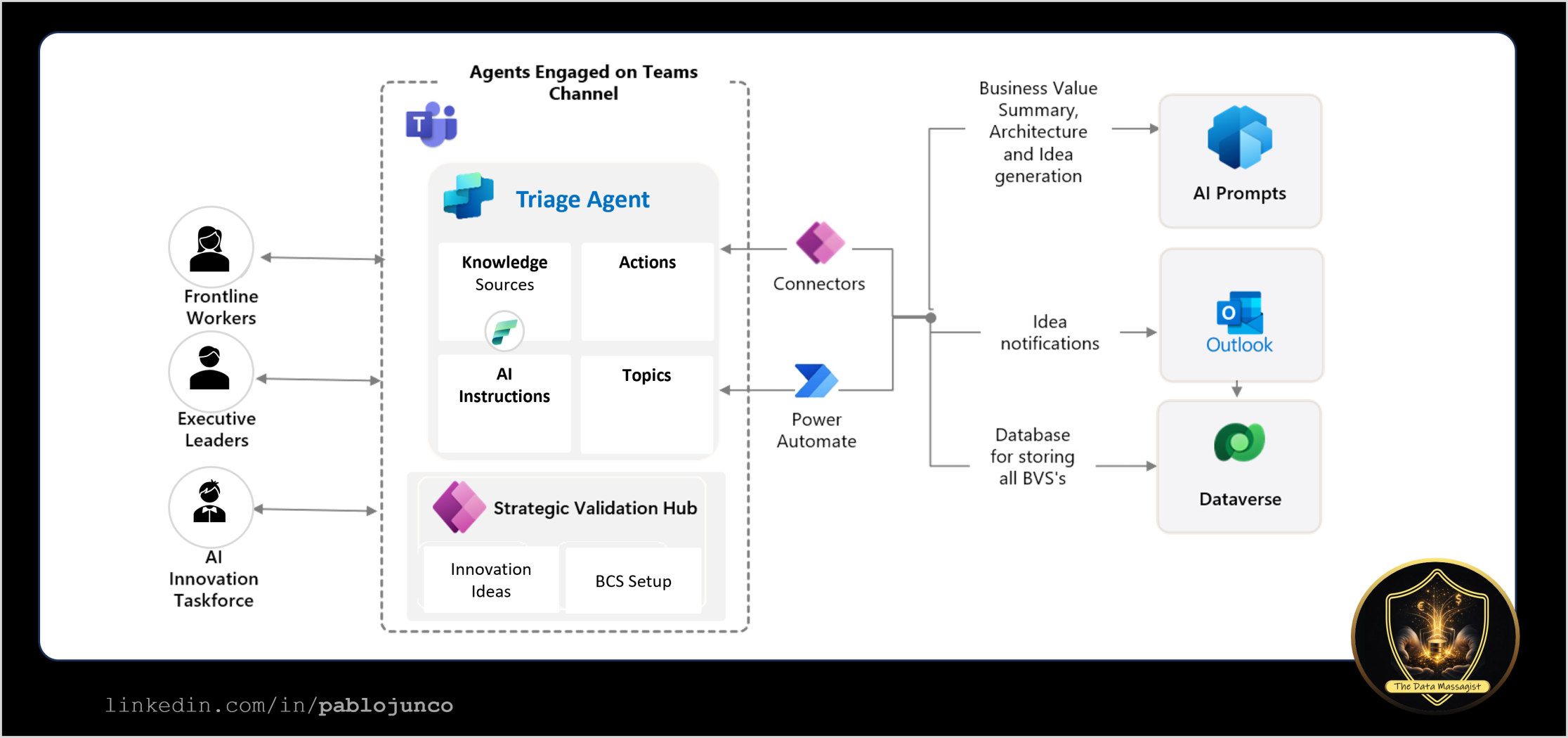
A practical example is the Microsoft AI Use Case Triage Agent, a leadership-oriented decision framework designed to help organizations scale AI investment prioritization. Through a guided conversational experience, the agent transforms natural language business ideas into structured, review-ready AI use cases enriched with business context, strategic alignment, and prioritization signals.
The result is a more scalable and consistent intake model that improves governance, accelerates decision-making, and helps organizations focus AI investments on initiatives with the highest potential business impact.
Below is the architecture and end-to-end operational flow supporting this intelligent triage capability.
2.2) Router Agent — Dynamic Task Delegation
The router agent is responsible for determining where work should go next across the enterprise ecosystem.
Its primary function is to answer a critical operational question:
“Which agent, system, domain, workflow, or human resource is best positioned to handle this task at this moment?”
Unlike traditional workflow engines built on static rules and predefined paths, router agents introduce dynamic, real-time decisioning into enterprise operations. They continuously evaluate multiple dimensions, including:
The context and intent of the request
Available agent capabilities and specialization
Real-time operational conditions and system capacity
Business priorities, policies, and governance constraints
Domain expertise and execution requirements
Based on this evaluation, the router agent dynamically assigns work to the most appropriate execution path.
For example:
A finance-related request may be delegated to a specialized finance agent
In telcos, a network outage may be routed to a Network Operations Center (NOC) operations agent
A compliance exception may require escalation to a human reviewer
A complex cross-domain request may trigger orchestration across multiple agents simultaneously
This represents a fundamental shift in enterprise automation architecture. Routing is no longer treated as a static workflow configuration problem, but as an adaptive intelligence capability capable of responding to continuously changing operational conditions.
In this model, the router agent becomes the enterprise’s intelligent dispatcher that continuously is balancing business priorities, execution capacity, specialization, and operational context to optimize how workflows across systems, agents, and people.
As organizations scale their AI ecosystems, this capability becomes increasingly strategic. Modern enterprises are moving toward operational models where execution paths are dynamically assembled in real time rather than rigidly hard-coded into workflows.
The result is a more adaptive, resilient, and scalable operational environment capable of responding intelligently to changing business conditions.
Organizations leveraging the Microsoft ecosystem can build router agents using Microsoft Foundry (known before as Azure AI Foundry) and the Microsoft Agent Framework .This approach enables developers to create intelligent routing layers capable of integrating multiple enterprise knowledge sources and operational systems, including:
Azure AI Search
Microsoft Fabric
Enterprise APIs and operational systems
Domain-specific AI agents and copilots
An additional architectural option is the use of Fabric Data Agents within Microsoft Fabric. However, because Connected Agents currently support a single Microsoft Fabric entry point per agent in Microsoft Foundry-based architectures, organizations typically implement a dedicated Fabric Data Agent for each domain or data context. These specialized agents are then connected into the broader router-agent ecosystem as Connected Agents.
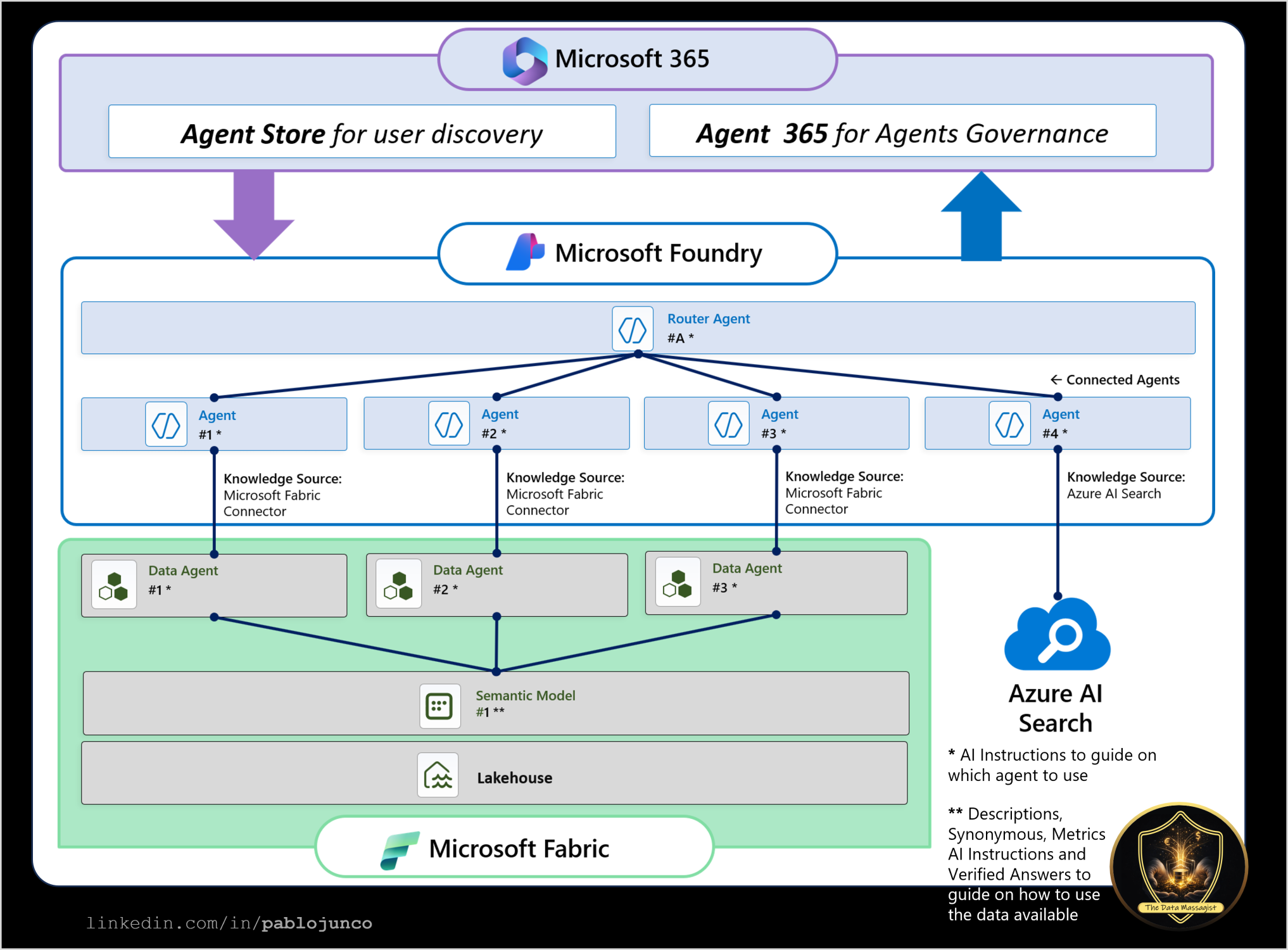
This design pattern enables enterprises to preserve domain specialization while still orchestrating intelligent routing across multiple data sources, business domains, and AI services.
2.3) Orchestrator Agent — Workflow Coordination and Execution
The orchestrator agent manages the end-to-end execution lifecycle across multiple agents, systems, workflows, and human interactions.
If the router agent determines who should perform the work, the orchestrator agent ensures how the work gets executed across the enterprise.
Unlike traditional automation engines, orchestrator agents coordinate distributed intelligence by managing:
Workflow sequencing and task dependencies
Execution state and shared context
Retry logic and failure recovery
Human approvals and escalation flows
Governance, monitoring, and policy enforcement
In practice, the orchestrator acts as the enterprise’s AI workflow conductor — ensuring that agents, systems, and people operate in a coordinated, reliable, and governed manner.
This aligns closely with Forrester’s view of intelligent automation and AI orchestration, where task delegation is no longer treated as a static workflow problem, but as a dynamic real-time decisioning capability.
“As AI ecosystems scale, intelligent orchestrating becomes a foundational capability for coordinating specialized agents, services, workflows, and human intervention dynamically.” — (Forrester)
In this model, the orchestration agent becomes the enterprise’s “intelligent dispatcher” — continuously evaluating context, operational conditions, business priorities, and agent capabilities to determine which system, workflow, human expert, or AI agent should handle a task at a given moment.
The result is a more adaptive and resilient operational model, where execution paths are no longer rigidly hard-coded, but dynamically assembled in real time based on the evolving state of the business and the environment.
A strong example of orchestration at scale is Databricks with its Agent Bricks platform, which has driven 327% growth in multi-agent workflows, clear evidence that organizations are shifting from single chatbots to multi-agent systems that autonomously orchestrate and execute full workflows. Within this model, Databricks uses a Supervisor Agent to coordinate specialized agents across domains. Since its launch in July 2025, it quickly became the top use case, representing 37% of Agent Bricks usage by October 2025.
If your company is using Microsoft 365, then you can use Copilot Studio to create low‑code/no‑code orchestration agents that connect to knowledge sources such as Microsoft Fabric, Azure SQL DB, and Dataverse. Since the ROI is tied with usage, agents created by Copilot Studio are accessible through Microsoft 365 apps (like Teams), Azure Bot Service channels, and mobile apps — enabling seamless, intelligent automation across your organization.
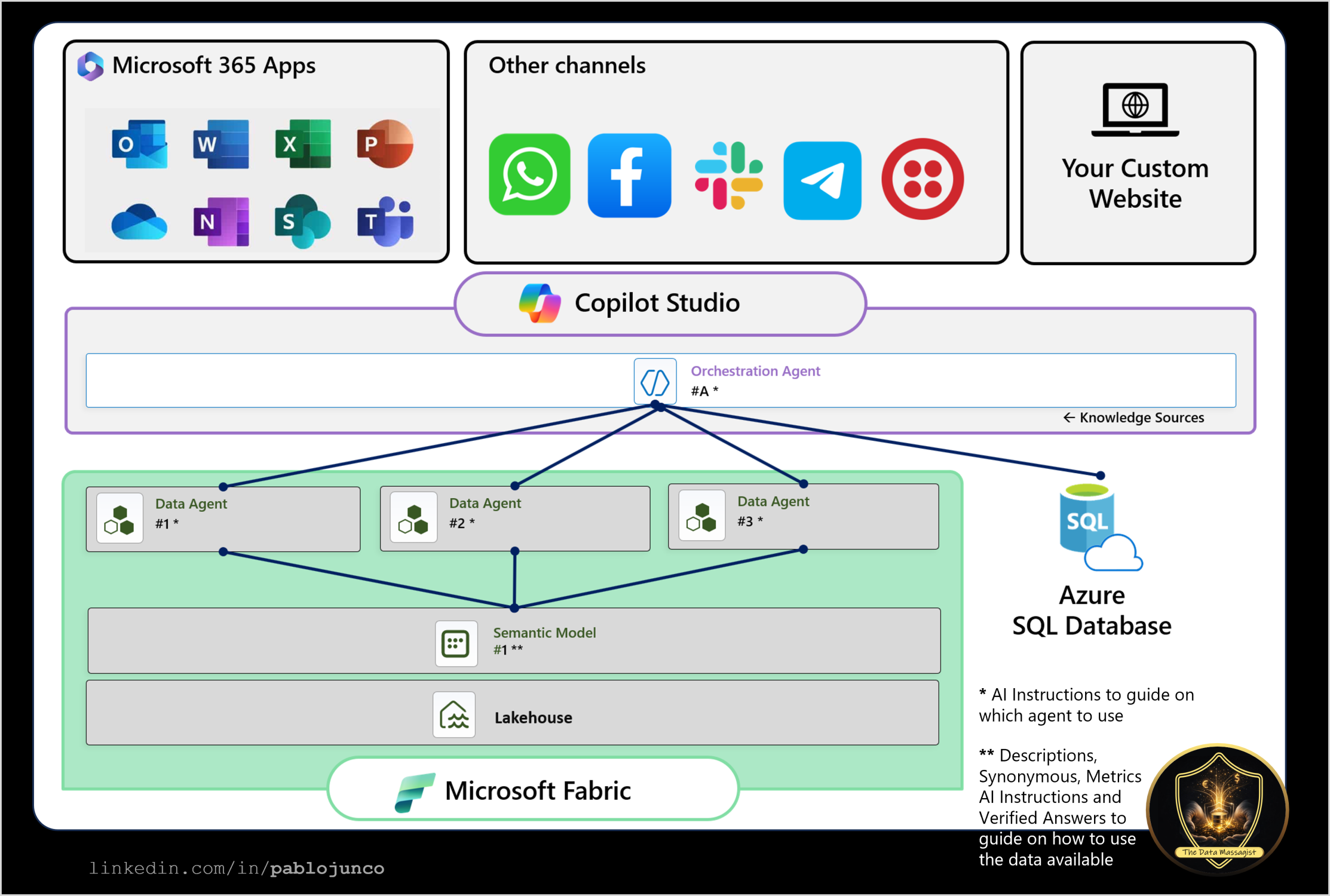
Of course, if your scenario is more complex or you prefer a pro-code approach, you can also use Microsoft Foundry to develop orchestration agents. To accelerate time-to-value for developers, the Foundry Agent Service provides a complete orchestration layer for agentic customization, enabling agents to call other agents as tools (Connected Agents). This allows tasks to be delegated across specialized agents, enabling them to collaboratively solve complex problems more efficiently. Thanks to Foundry IQ, Agents can be connected with memory, knowledge (incl. Fabric Onelake, Mongo DB, Databricks, Azure SQL, etc.) and over 1,400 MCP-enabled connectors.
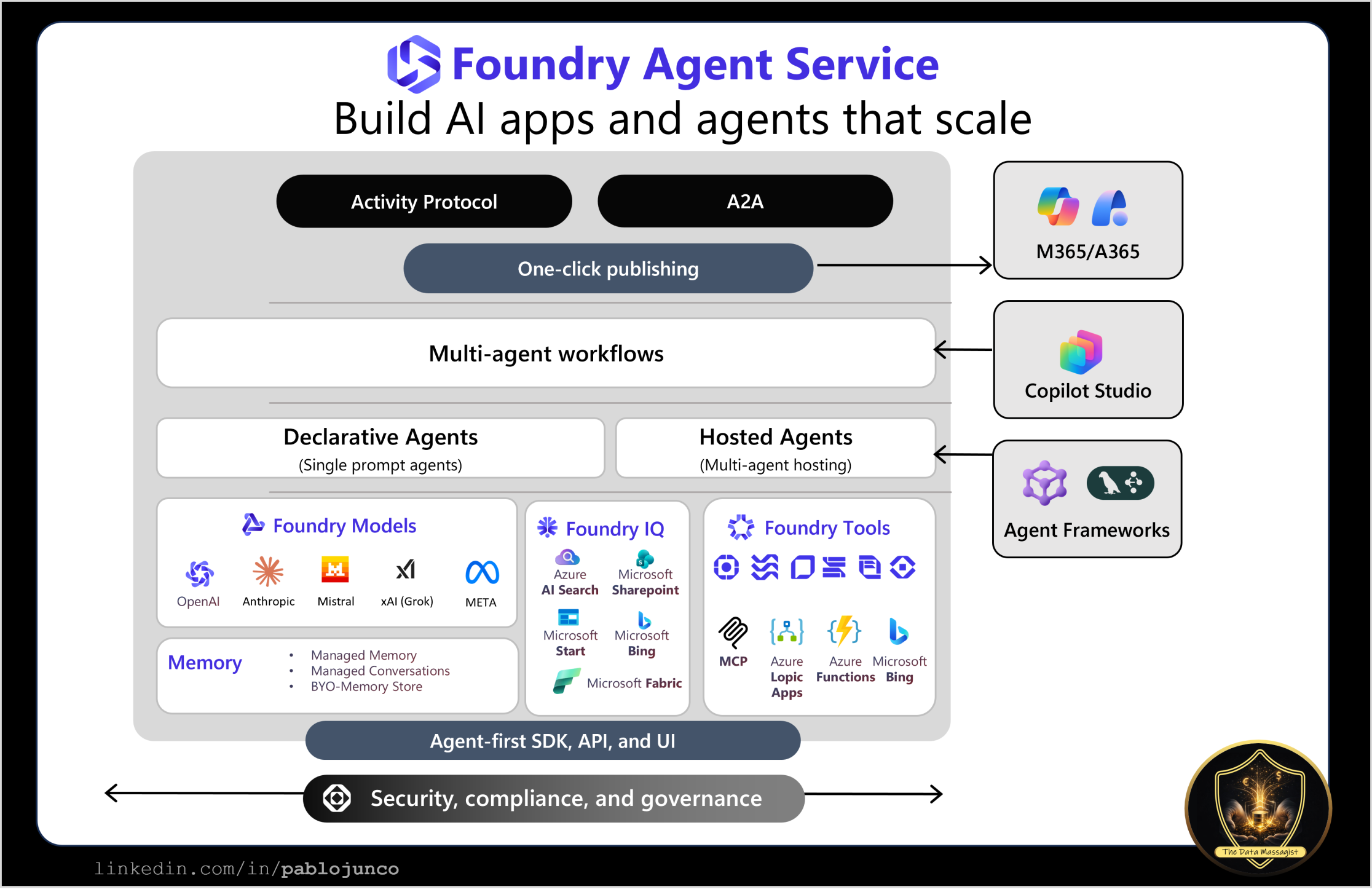
This allows organizations to operationalize enterprise-grade AI workflows with low-code or pro-code approaches while preserving governance, resiliency, and interoperability across the broader AI ecosystem.
3) Connecting MAS Patterns with Industry Applicability
Multi-Agent Systems (MAS) are emerging as a foundational enterprise AI architecture because they reflect how real industrial environments already operate: distributed, event-driven, and highly specialized.
Across Mining, Oil & Gas, and Telecommunications, organizations are moving from isolated AI automation toward coordinated ecosystems of agents that sense, decide, and act together in real time.
According to Databricks’ State of AI Agents report, technology companies are leading the adoption of agentic systems, leveraging their ability to decompose complex business challenges into well-defined problems that can be solved by specialized, coordinated AI agents. I do recommend reading the report as it also shows their top AI use cases by Industry and very good insights from Databricks' telemetry.
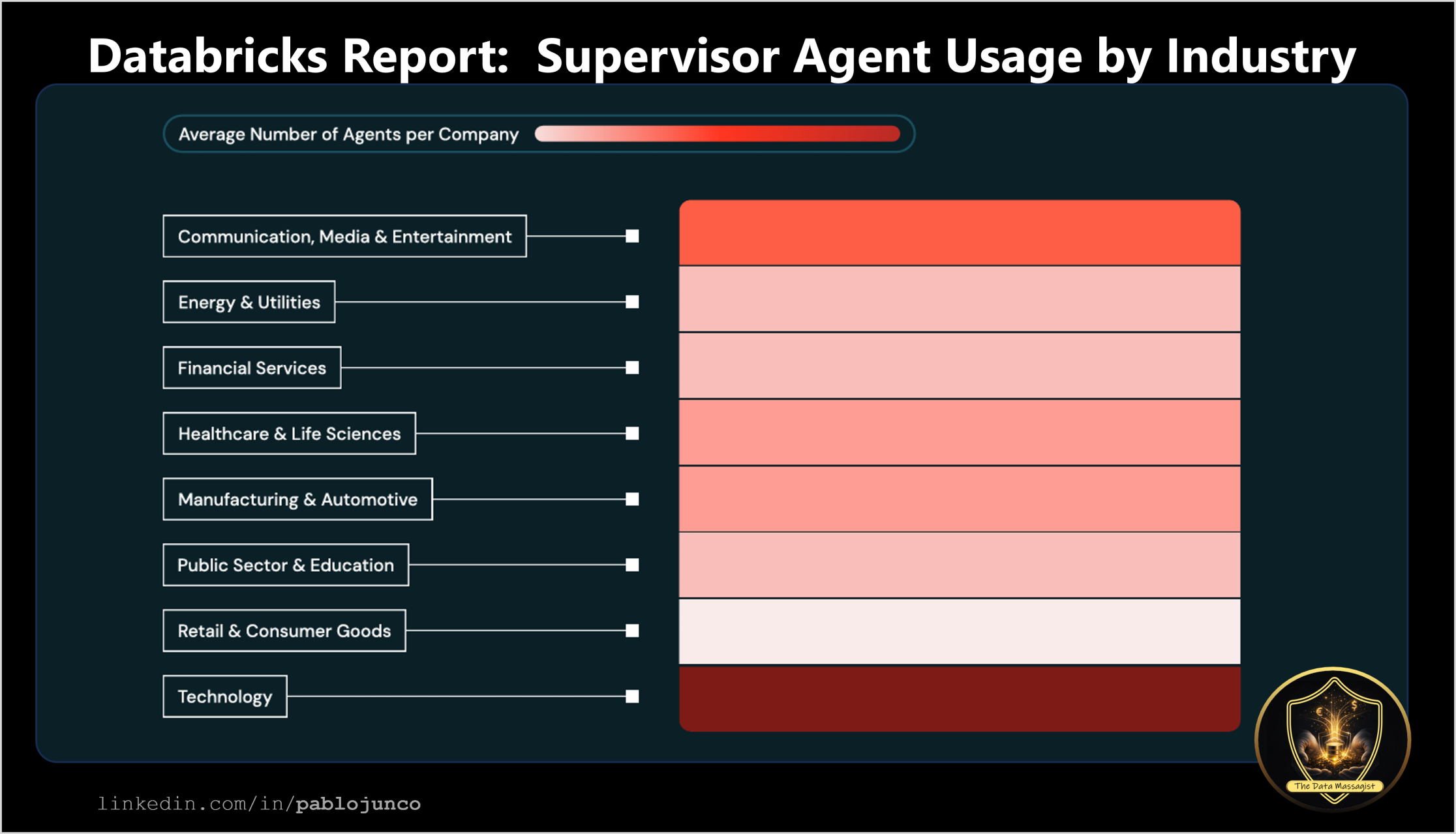
For me is clear that the value of MAS is not in a single agent but in how agents collaborate through:
Triage (intake and prioritization)
Routing (dynamic task delegation)
Orchestration (end-to-end workflow execution)
Multi-agent collaboration (distributed intelligence systems)
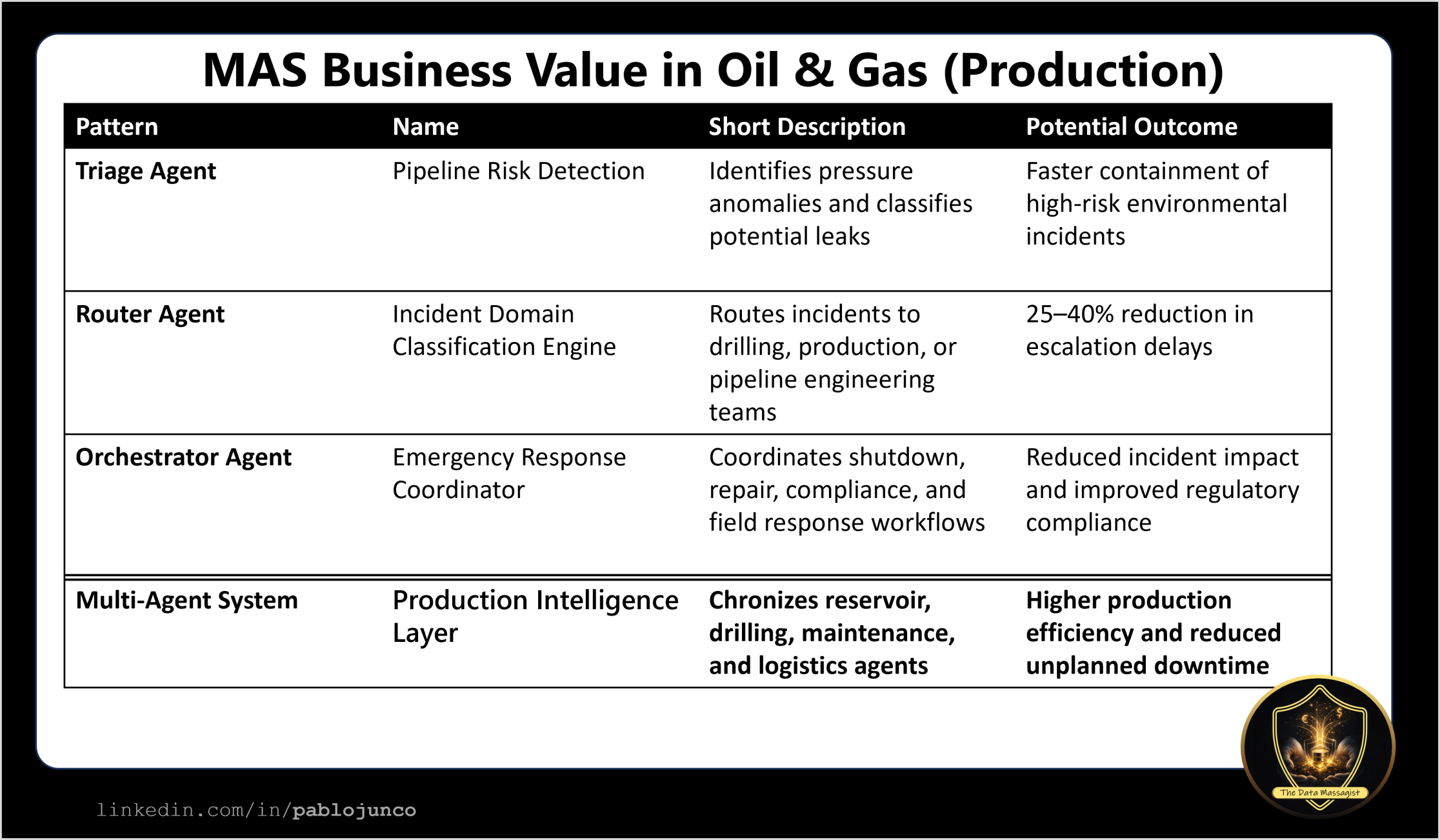
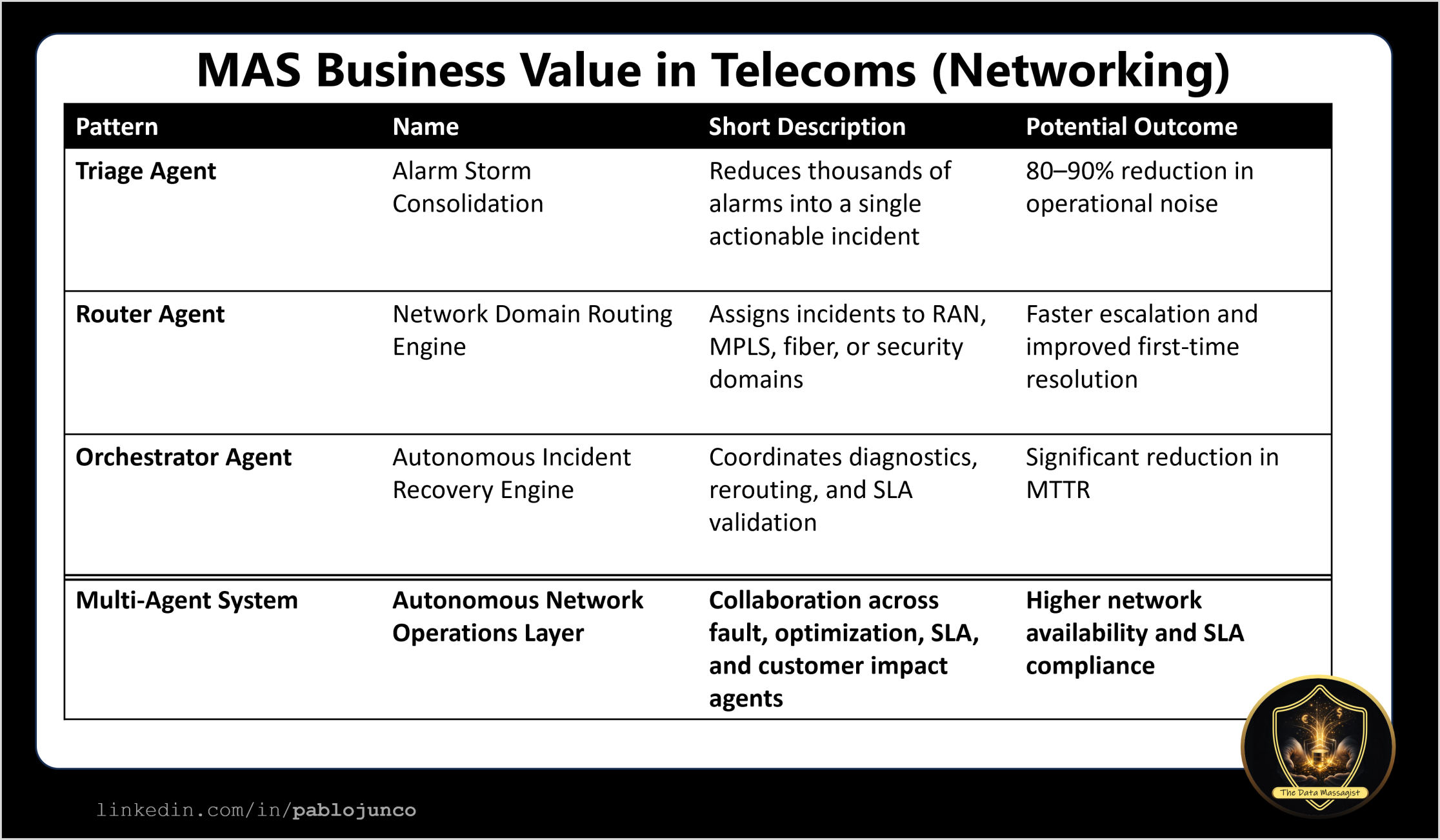
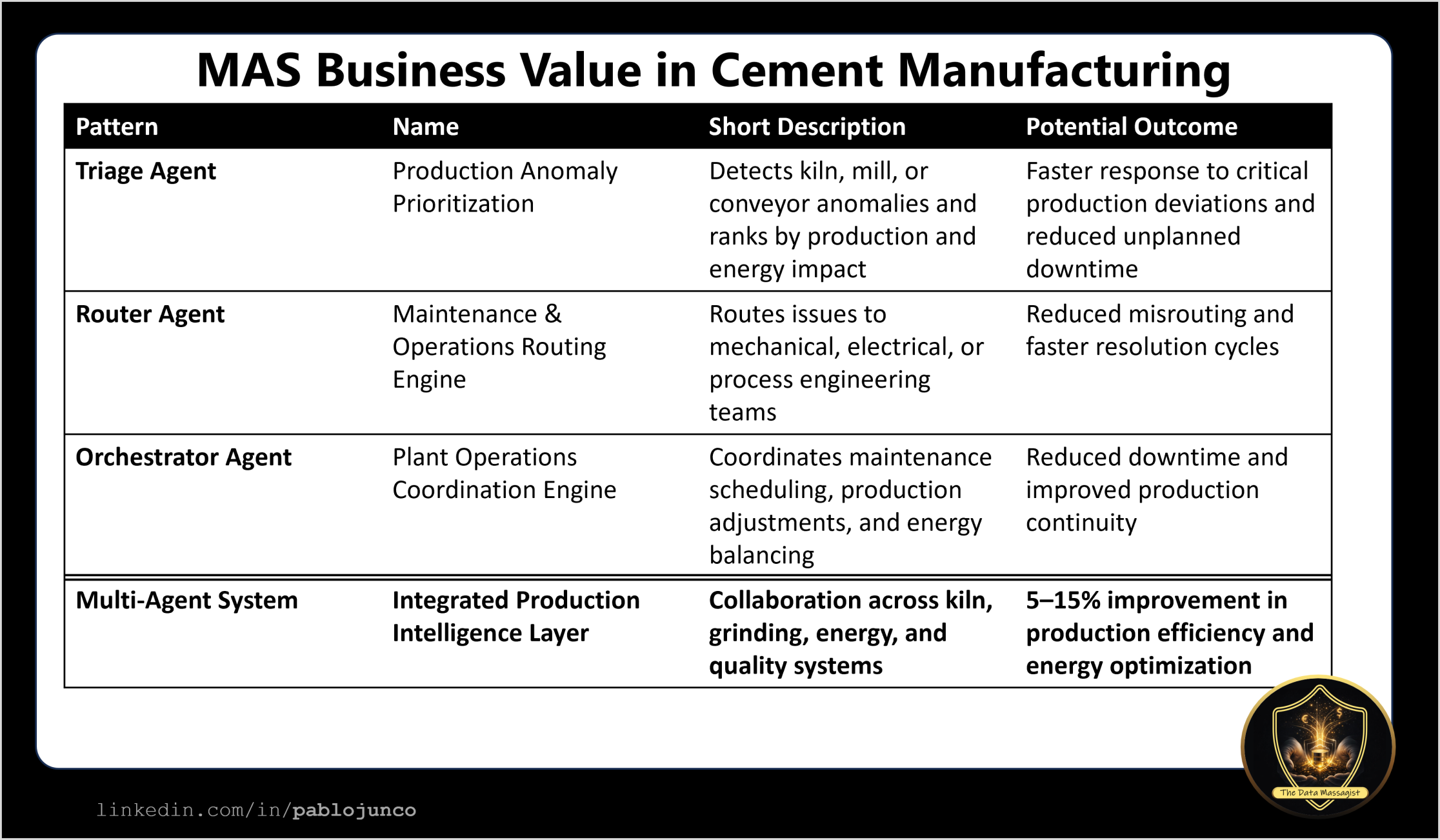
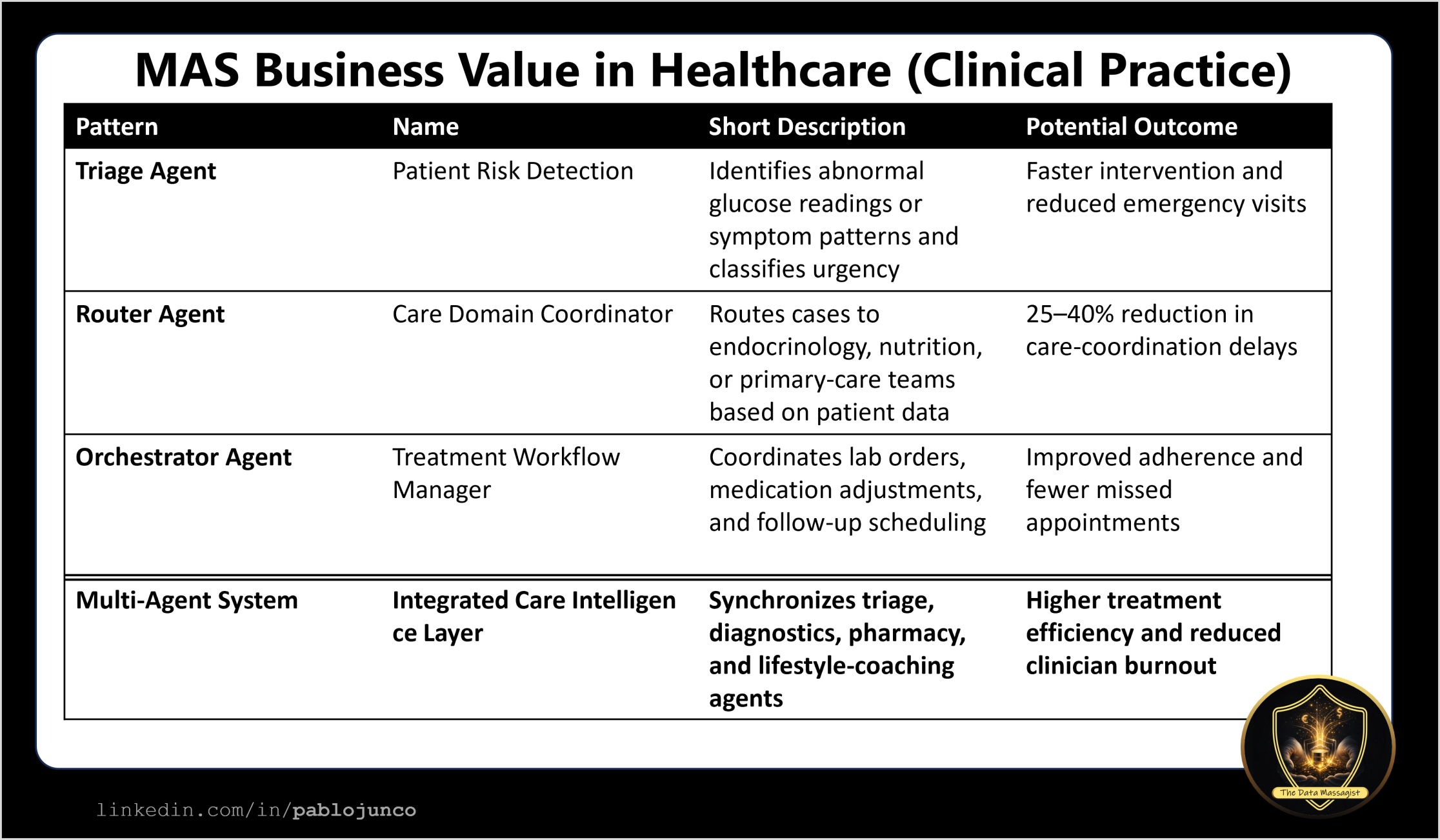
Below is how these patterns translate into real impact in key industries: Oil & Gas (Production), Cement Manufacturing, Telecoms (Networking), and Healthcare.
3.1) Oil & Gas — High-Risk, High-Complexity Operational Intelligence
As I learned from Darryl Willis (CVP, Microsoft Energy and O&G) and Sergio Gonzalez (Director, O&G Industry Advisor), one of the most impactful applications of Multi-Agent Systems (MAS) in the Oil & Gas industry is production optimization through coordinated intelligence across drilling, production, maintenance, logistics, safety, and compliance operations. Modern upstream environments are highly dynamic and operationally complex, making MAS especially valuable for enabling real-time collaboration between specialized AI agents.
Typical production-focused agents include:
Reservoir Analysis Agent — evaluates reservoir behavior and production patterns
Drilling Optimization Agent — optimizes drilling parameters and operational efficiency
Asset Integrity Agent — predicts equipment degradation and maintenance risks
Logistics Coordination Agent — manages supply operations, spare parts, and field logistics
Environmental Compliance Agent — monitors environmental KPIs and regulatory exposure
Safety Monitoring Agent — detects hazardous operational conditions and safety anomalies
Orchestrator Agent — coordinates workflows, approvals, remediation, and operational execution
Together, these agents create a connected operational intelligence layer capable of correlating telemetry, predicting failures, coordinating workflows, and improving production efficiency while reducing operational and environmental risk.
For Oil & Gas leaders, it is important to stop viewing MAS as another experimental AI initiative and instead treat them as a core strategic capability for the next generation of digital energy operations. The industry is dealing with rising production complexity, aging infrastructure, workforce shortages, stricter environmental regulations, and continuous pressure to improve efficiency while reducing operational and environmental risk. MAS is one of the few architectural approaches that directly addresses these challenges by enabling predictive maintenance, faster incident detection, intelligent operational coordination, and scalable decision-making across highly distributed and remote assets.
3.2) Telecommunications — Autonomous Network Operations (NOC Evolution)
Among all industries, telecommunications may be one of the most mature environments for enterprise agentic systems.
Why? Because telcos already operate:
Massive telemetry streams
Distributed systems
Real-time operational events
Strict SLA environments
Highly automated infrastructure
Complex escalation paths
This makes telecom operations — especially the NOC and Networking Business Unit — ideal for multi-agent architectures.
3.3) Cement Manufacturing — Intelligent and Autonomous Production Plants
I personally think that in cement manufacturing MAS could contribute to production optimization across continuous manufacturing lines, where kilns, raw mills, grinding systems, energy consumption, and quality control must operate in tight synchronization. Cement production environments are highly energy-intensive and process-dependent, meaning that small deviations in temperature, material composition, or equipment performance can quickly translate into significant production losses or quality degradation.
MAS becomes transformational because it enables specialized agents to collaborate in real time across the production line as a unified operational intelligence layer.
Typical production-focused agents may include:
Kiln Optimization Agent
Grinding Mill Performance Agent
Energy Efficiency Agent
Quality Control Agent
Equipment Health / Predictive Maintenance Agent
Material Flow & Logistics Agent
Operations Financial Insights Agent
Together, these agents continuously monitor telemetry, detect anomalies, adjust operational parameters, and coordinate maintenance or production adjustments across the plant to ensure stable production, optimal energy usage, and consistent product quality.
As highlighted by Judson Althoff (CEO, Microsoft Commercial Business) on his post "Unlocking human ambition to drive business growth with AI" (April 28, 2026), Cemex —a global leader operating more than 50 cement plants and over 1,000 ready mix plants across four continents—built LUCA AI Agent using Microsoft Foundry and Azure OpenAI to accelerate decision at scale. This AI agent provides around 100 senior leaders real-time visibility into more than 120 KPIs across the business, reducing decision cycles from days to seconds.
“It’s an improvement in financial information visibility that enables us to activate operational levers, it’s a self-service tool that should help to find operational efficiencies.” says Fausto Sosa (Cemex’s IT VP)
Note: I'm especially proud to see the outcomes of this project as I was part of it. Thanks Carlos Augusto Mantilla Espinosa for trusting us.
For cement industry leaders, MAS should not be viewed as an incremental automation layer, but as a strategic capability to modernize production operations. The industry faces increasing pressure from energy costs, carbon reduction targets, equipment aging, and demand volatility. MAS directly addresses these challenges by enabling predictive maintenance, real-time process optimization, energy balancing, and coordinated production control across complex industrial systems. Organizations that adopt agentic architectures early will be better positioned to reduce energy consumption, improve clinker quality, minimize unplanned downtime, and operate production lines with higher efficiency and resilience at scale.
3.4) Healthcare — clinical and operational teammate
Healthcare is one of the most data-rich yet under-leveraged industries in the world, generating roughly 30% of global data volume. However, up to 90% of healthcare data remains unstructured and largely inaccessible, limiting its operational and clinical value.
This gap represents a major opportunity for Data & AI. With platforms such as Azure Databricks and Microsoft Fabric, healthcare organizations can begin to unify fragmented data sources and transform them into actionable intelligence powered by AI.
From an Agentic AI perspective, healthcare is a natural fit for Multi-Agent Systems (MAS). The industry is inherently multi-step, cross-functional, and high-stakes—where no single system can manage the full complexity end-to-end. This makes it ideal for coordinated AI agents that collaborate across clinical and operational workflows.
Instead of AI acting only as a “smart assistant,” Agentic AI enables it to function as a clinical and operational teammate, delivering:
Faster patient throughput
Reduced clinical errors
Lower clinician burnout
More continuous and personalized care experiences
A practical view of practitioner-facing agents includes:
Triage Agent — prioritizes and routes patient cases
Diagnostics Agent — analyzes labs, imaging, and vitals to support next steps
Care Coordination Agent — manages scheduling and follow-ups
Medication Safety Agent — ensures safe prescribing and dosing
Documentation Agent — automates clinical notes and discharge summaries
Chronic Care Agent — monitors long-term conditions and flags interventions
Together, these agents form a multi-agent clinical architecture where specialized AI systems collaborate across the patient journey. The impact is significant: improved operational efficiency, fewer errors, and reduced administrative burden on clinicians.
To enable this at scale, I believe that a Microsoft Fabric-based data foundation becomes essential—unifying EHRs, imaging, clinical events, and operational data into a governed, scalable model.
This capability is further accelerated by adopting Microsoft Foundry and/or Microsoft 365 Copilot Studio, which provide a low-code/no-code environment to rapidly design, orchestrate, and deploy multi-agent systems across healthcare scenarios. These platforms significantly reduce the time required to move from concept to production-grade agent workflows.
In addition, enterprise-scale adoption requires end-to-end AI governance, where solutions such as Microsoft Agent 365 help ensure secure identity, policy enforcement, observability, compliance, and lifecycle management of agents across the organization.
On top of this stack, healthcare organizations can enable agents to:
Analyze capacity and operational bottlenecks
Explore clinical hypotheses without traditional development cycles
Support decision-making in diagnostics, treatment, and resource allocation
This represents a shift from static reporting systems to agent-driven healthcare environments, where MAS continuously interprets data and coordinates actions in real time.
To move forward, organizations should validate feasibility across five key dimensions:
Target architecture using Microsoft Fabric (together with Azure Databricks, if necessary) as the unified data layer
Adoption of Microsoft Foundry and/or Copilot Studio for rapid multi-agent development
Scope of initial clinical and operational data integration
Secure enablement for clinicians and engineers to build and operate agents
End-to-end governance using platforms such as Agent 365
Clear success metrics across clinical, operational, and safety outcomes
This foundation establishes the path toward scalable and responsible adoption of Agentic AI in healthcare—starting from operational optimization and progressively evolving into full clinical intelligence and automation.
I do invite you to read an article recently shared by Patricia (Patty) Martone Carrolo (CVP, US Heath & Life Science) and written by Sally Beatty to get familiar with 7 ways AI is advancing healthcare and wellbeing around the world - including the story of my friend Julian Isla (co-founder and board member of Foundation 29)
4) Conclusions — Why This Matters Now
If industry projections are correct, by 2028 the world could surpass 1 billion AI agents operating across enterprises, platforms, devices, and autonomous systems.
In that future, the winners will not be the organizations with the “best chatbot.”
They will be the organizations that master:
Multi-agent collaboration
Recursive orchestration
Shared memory and shared context
Safe autonomy
Governance at scale
Human-AI operational collaboration
In other words:
The future belongs to organizations that can make agents work with other agents.
We are entering a new phase of enterprise AI evolution where organizations are no longer deploying isolated AI tools or standalone copilots.
They are building AI operating systems composed of interconnected agents.
And in that world:
A triage agent becomes the first operational intelligence layer
A router agent becomes the enterprise decision fabric
An orchestrator agent becomes the execution and coordination layer
Multi-agent systems become the collaborative operational backbone of the enterprise
The organizations that will lead this transformation are not necessarily those with the largest models or the most advanced copilots.
They will be the ones capable of designing scalable ecosystems where agents collaborate safely, share context intelligently, coordinate dynamically, and operate with governance and observability at enterprise scale.
Because ultimately, the next evolution of AI is not about isolated intelligence.
It is about coordinated intelligence.
And that is exactly what I will continue exploring in The Data Massagist — now with a new home, new capabilities, and a growing community of practitioners helping shape the next era of enterprise AI.

